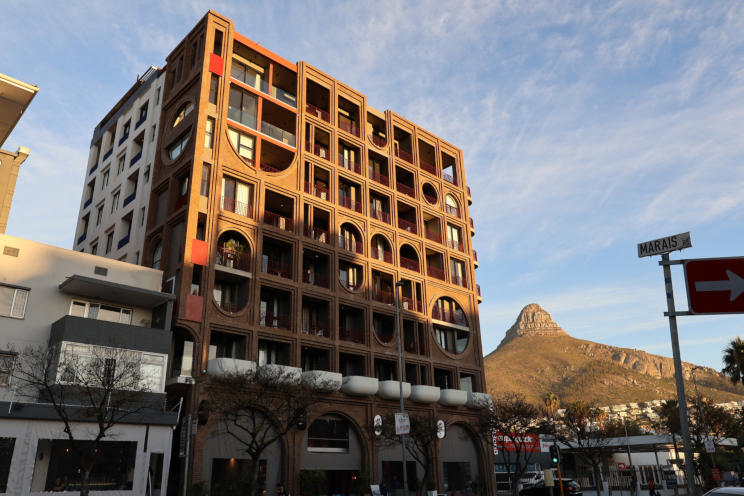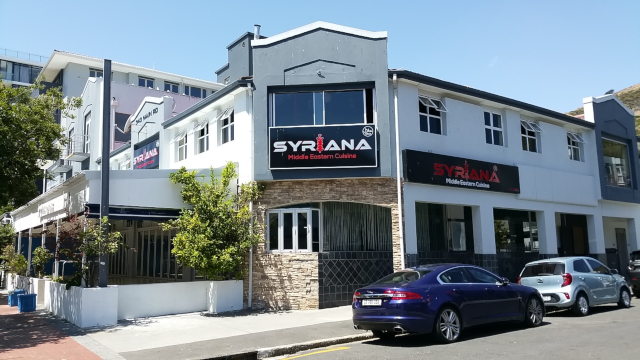
Part 2: My guide about buying and setting up a brand new compact studio flat Cape Town’s most amazing district, Sea Point. It’s not as expensive as you might think.
Part 1: Purchase and early stages
Getting the keys, ripping out the murphy bed, the final costs and where’s the bin?
The developer is going to come asking for the balance near the end of the project. Their tranferring attorney’s will send you an email urging you to pay up now: “Kindly find attached hereto our Statement of Account setting out the balance purchase price, transfer costs, occupational rental, and the levies.” But not so fast…
It was November 2024 and the estimated key handover date was in February 2025. Transfer about 2 months after that. Paying for all this 5 months before you have the property in your name seemed cruel and harsh. And risky. The Subscription agreement confirmed this. The City of Cape Town will issue an occupancy certificate once the building is deemed habitable. This is referred to as the “Completion Date”. You can get the keys and move in and that’s when occupational rental and levies would be payable. Transfer would take place a month or 2 after this as there is still some bureaucracy around the creation of a new sectional title scheme. Eventually, the lawyers grudgingly conceded this. In the end we got the keys at the end of March 2025 and kept the money in an investment account for another 3 months. The interest earned paid for the occupational rental for 2 months.
Just a couple of costs to bear in mind when paying the final balance:
- R38000 Transfer costs due to the lawers, for whatever it is they do. No smoothie, no single origin bean espresso, no instant coffee included.
- R13000 2 months occupational rent
- R1600 2 month levies
- R3300 Security transfer tax- welcome to the world of stawk trading!
(Latter 3 costs based on transaction value)
Put these costs on your spreadsheet early on to avoid that rummage down the back of the sofa when the seller and transferring attorneys are nagging you. (Although you never know what forgotten assets the sofa has concealed in its creases and stuffing.)
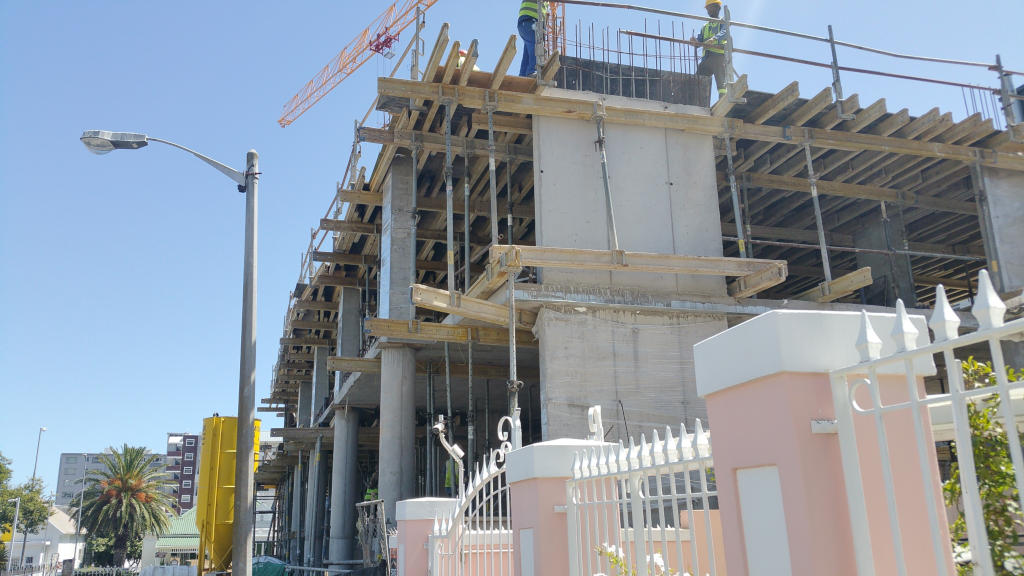
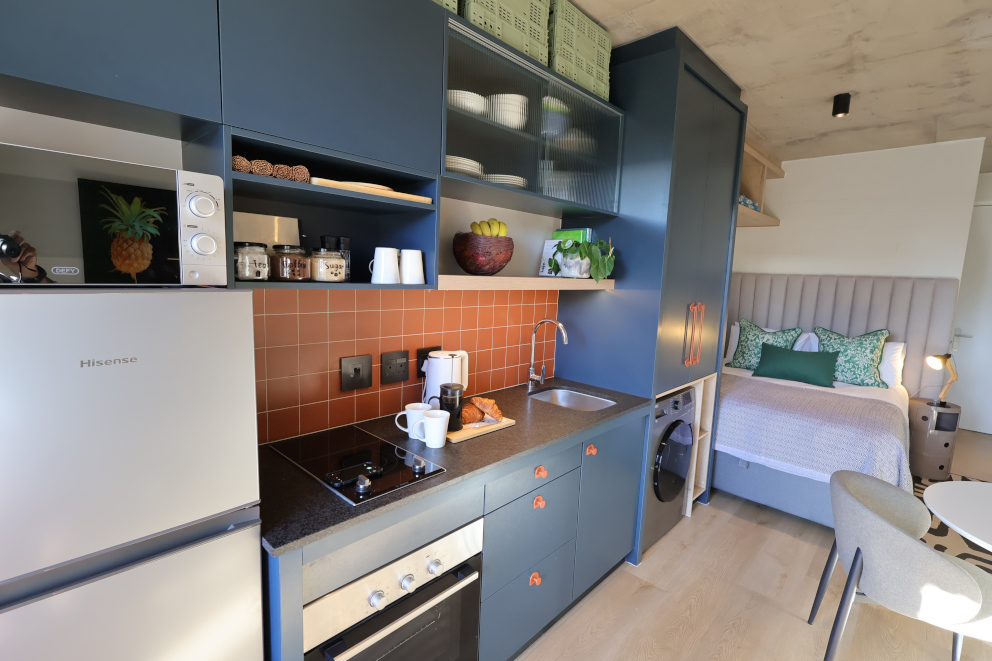
By the end of 2024 the big construction work on the building was mostly over and the finishes, fittings, floors and tiling nearing completion on the upper floors. The handover date in early 2025 is not yet known. At this stage we are compiling the full furniture and equipment list for the flat. As well as some some decor items to finish it off. Although the building site was just down the road from us it was off limits for owners. The configuration of our unit included a fold out (Murphy) bed, upon which most of the function and floor layour depended and we really wanted to see the real thing. In a place this small even the size and placement of the microwave oven needs some attention: we got a fridge with top freezer and put the microwave on that, making sure that they could both fit under the wall-mounted cupboard.
You have the option of having a supplier appointed by the developers to fully furnish and equip your new place. Their list could be considered “minimal self-cater” and the overall quality of the items is alright. The full inventory to make what they call a Micro Murphy liveable was priced at ZAR126000 (about GBP5250). Our Complete Furniture and Equipment Schedule is way more detailed and hand customised for actual living in a property: whether that is you as the owner, a short stay guest of a few days or someone using it as their home for a couple of months. Our list is about 20% cheaper. There is some effort in ordering, taking delivery and packing/installing the stuff but the end result is incomparable to the generic product look that comes with the default pack. Remember, the property has to stand out as a unique listing on a platform like Airbnb, whereas the standard furniture and decor kit will radiate rental pool uniformity. Just another corporate room option. Send us a message if you’d like to know more about our Complete Furniture and Equipment Schedule. All the items are priced out and readily available from local Cape Town suppliers.
And so, in March of 2025, we were invited to come to the new building, receive the keys and proudly access the freshly minted micro-flat. There were complementary Woolworths muffins and bottles of mineral water in the lobby, which somehow amplified the state of finished unfinishedness, like construction was under a fragile ceasefire. The building was technically habitable in that a “Certificate of Occupancy” had now been issued by the City of Cape Town but there was still paving, landscaping, painting, snagging and other stuff to be done.
You realise how big a double bed is when it is mounted on a big hinged cupboard door and folds up into the wall to blend in with the rest of the blue built in cupboards in the new unit. The mechanism and action were pretty good but this was without the mattress, bedding and pillows which would have added a lot of bulk and moving parts to the mix. No sign of straps to hold things in place whilst going into a vertical position. The original diagram suggested a sofa that would niftily deploy when the bed was put in an upright position. This was merely a conceptual design. The translation from software hallucination to a real world sofa that would effortlessly come into operation as the bed glided up and away into the wall was not inspiring. A base of upholstered foam with back cushions and no arms was presented. A clunky fusion of futon and beanbag that would get propped up against the bed-cupboard when needed.
Then there was the space between the foot of the bed and the wall when the the bed was folded out. A narrow gap was left which would provide access from the living and kitchen area to the bathroom and entrance of the flat: lousy flow and feng shui. To make it worse, a fold out desk was mounted on the wall in this choke point. The desk couldn’t fold down flat against the wall because the internet router was mounted directly under it so the narrow passageway now required a sidways shuffle to traverse it. Here’s the video showing the depressing reality.
No matter how we tried we couldn’t arrive at a logical workflow that would accommodate this setup of bed, desk and floppy sofa. The solution? Rip it out and put in a normal bed. The carpenters that did the development were still on site and and they quickly came up with a redisgn of the affected area and related cupboards. The new, normal bed was going to go up against the wall in the corner. One tall cupboard would have to go but there would be increased shelf space above the length of the bed. In such a small unit where storage space is critical think of getting a bed with a base that opens up. It costs a bit more but opens with the aid of hydraulic arms (like in car boots) and has a large volume. Perfect for eating up unpacked suitcases and other things that aren’t needed on a day to day basis.
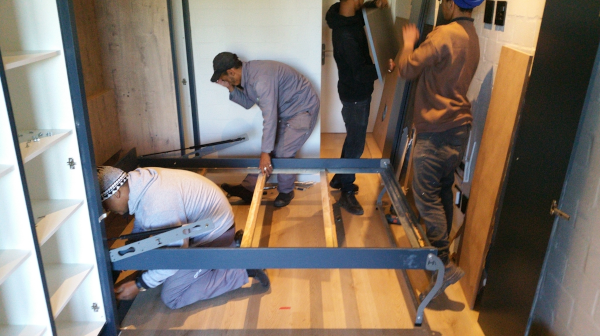
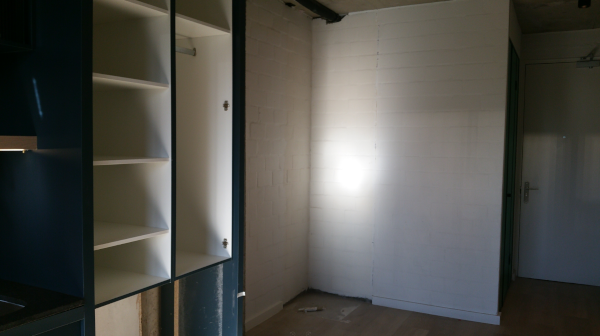
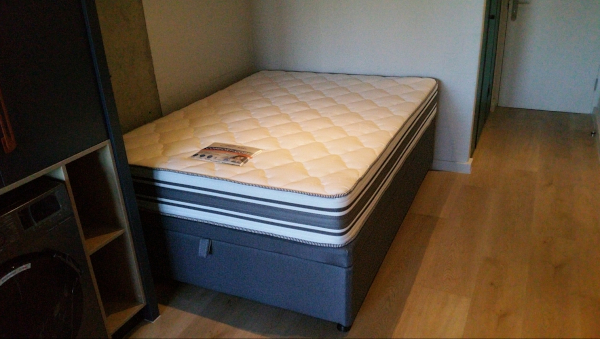
We relocated the fold out wall desk to a more sensible place where it could stay up and be a permanent workspace or dining surface. When confronted with fold out beds and desks, ask yourself the question: “Will I or my guests ever fold up the furniture when not in use?” Probably never: they end up taking up more space than a well thought out single-function furniture item.
A place for the washing machine and it’s water and power supply had also been overlooked. The cabinet got sorted out when the carpenters worked on the murphy removal. Plumbing and power after that. There is a communal laundry room downstairs so it is tempting to leave a small flat without a washing machine. Don’t do it! Perhaps when 12m² units become a thing this may be unavoidable but until then provide a washer or even a washer drier.
Remember the days when you could hang your laundry up on washing lines on the roof of an apartment building? No longer. It’s either the tumble drier or clothes horse in the bathroom. No drying clothes on the balcony say the house rules. This makes sense aesthetically, and from there balconies become the place where unused exercise bikes and other junk go to die. Architects and developers of modern blocks have a blind spot for this sort of thing.
What about a bin in the kitchen? Seems we no longer generate waste, another awesome benifit of AI?. It was neccessary to cut the shelf in the cupboard under the kitchen sink to fit a compact waste bin neatly out of the way. Beat’s sleeping next to the dustbin, which seems to be the default design for compact studios in Cape Town.
These are some of the main issues that we started working on soon after getting the keys. There are going to be some snags: work through the apartment from one end to the other and note them. The chipped tile, paint splatters or dripping toilet cistern really grate on you but be aware of hidden defects that might catch you out later. Check every electrical socket and light switch and fitting. Check the drains (building residue and sawdust can clog them up). Turn the cooker on and see that the plates warm up. Check the oven and all its functions. Ours had an interior light that didn’t come on. Swapping out the bulb didnt’t help, there was some factory defect with our fancy new Bosch oven. Getting a Bosch technician in to fix it needed resolve and lots of coordination between the supplier, developer and installers (who may or may not have been the electricians or carpenters). It took about 2 weeks to arrange. The fix took 10 minutes: slide it out, take off top cover, identify one push-on electrical connector that supplied power to the bulb holder that never got pushed on in the factory. Push it on, replace cover and oven. Caramba! A beautifully illuminated oven interior when powered on.